
STC 9110B - Cintas Service User Guide
STC 9110B
Uniform Rental and Facility Services User Guide
This guide provides instructions and best practices for utilizing Contract STC9110B Uniform Rental and Facility Services.
1. Introduction
Purpose
What is STC 9110B?
Statewide Term Contract (STC) 9110B, Uniform Rental and Facility Services, provides authorized North Carolina public entities with access to competitively awarded vendors that offer uniform rental and facility support services. The contract includes uniform rental services, floor mat services, floor mop services, linen services, first aid and safety supply services, and Automated External Defibrillator (AED) leasing services. The contract is intended to provide a streamlined, statewide solution for recurring service needs that support daily operations and workplace safety.
Intended users
STC 9110B is available for use by North Carolina state Buying Entities, departments, institutions, universities, community colleges, and other authorized entities eligible to utilize statewide term contracts. The contract is designed for organizations that require ongoing uniform rental programs, facility support services, first aid and safety supply management, or AED leasing services as part of their operational activities.
Benefits of using the contract
Using STC 9110B allows entities to obtain uniform rental and facility services through a statewide contract that has already been competitively established. The contract is intended to simplify procurement activities, reduce administrative burden, and provide consistent access to qualified service providers. By establishing clear expectations for service quality, delivery accuracy, responsiveness, and reporting, the contract helps Buying Entities receive dependable service while providing greater visibility into contractor performance and opportunities for continuous improvement over the life of the contract.
Contract Overview
Contract provides:
- Uniform Rental Services, including but not limited to the rental of uniform apparel, uniform accessories, customization, personalization, alteration, fitting and sizing services, laundering, cleaning, mending, and repair incidental to the offering of uniform apparel and uniform accessories;
- Facility Services, including but not limited to floor mat services, floor mop services, linen services, wiper and towel services, restroom supplies services, hand hygiene services, and cleaning solution dispensing services; and
- First Aid, Safety Services and Automated External Defibrillator (AED) Leasing Services to include first aid and safety supply services, safety training, and services related to the lease of AEDs.
What the contract is designed to accomplish:
- Simplify procurement
- Improve service consistency
- Reduce administrative burden
- Increase visibility into vendor performance
2. Is This Contract Right for Me?
Before using this contract, take a few moments to consider your organization's uniform service requirements. The guidance in this section will help you determine whether STC9110B provides the products, services, and support needed for your employees and operations, as well as identify situations where another procurement vehicle may be more appropriate.
This contract may be right for you if you need:
- Employee uniform rental and management services
- Recurring floor mat rental and replacement services
- Linen rental and laundering services
- Automated External Defibrillator (AED) leasing programs
- First aid cabinet inventory management and restocking services
This contract may not be the best fit if you need:
- Direct purchase of uniforms without an ongoing service component
- Janitorial or facility cleaning services
- Direct purchase of Personal Protective Equipment (PPE)
- Direct purchase of AED equipment
- Fire extinguisher or fire suppression system inspections and maintenance
Quick Rule of Thumb
If you need a recurring service involving uniforms, linens, mats, first aid supplies, or leased AEDs, STC9110B may be the right solution. If you are looking to make a one-time purchase of equipment or supplies, another contract vehicle is likely more appropriate.
Reminder
The following items are excluded from this Contract:
- Maintenance, Repair, and Operation (MRO) Supplies and Equipment covered by Statewide Term Contract 2711B to include Personal Protective Equipment (PPE), Work shoes, Boots, Masks, Gloves, Batteries, Safety and Security, and the direct sales of Uniforms, Towels, Floor Mats, Linens, and Mops
- The direct sale of Sanitary Paper Supplies covered by Statewide Term Contract 1411B
- The direct sale of Automated External Defibrillators (AEDs) and accessories covered by Statewide Term Contract 4217A
- Fire System Testing, Inspections, and Repairs
- Preventative Maintenance and Janitorial Services
- Promotional Items
3. Available Services
The STC9110B contract offers a range of uniform rental and facility services designed to support the day-to-day operational needs of Buying Entities and participating entities. The services available under this contract extend beyond uniforms and include related workplace solutions that help organizations maintain safe, efficient, and professional working environments.
Through this contract, Buying Entities can obtain recurring service solutions from qualified vendors under established contract terms, reducing the time and effort required to procure these services independently. The following sections provide an overview of the available service categories, key service features, and considerations for selecting the solutions that best align with organizational requirements.
Uniform Rental
Employee uniforms with cleaning and replacement
Floor Mats
Recurring replacement service
Linens
Towels, shop rags, etc.
Mops
Managed mop service
Restroom Supplies
Supply management
Hand Hygiene
Dispensing systems and replenishment
Cleaning Solutions
Dispensing systems and replenishment
First Aid
Cabinet replenishment and supplies
PPE
Cabinet replenishment and supplies
AED Leasing
AED equipment leasing
Safety Training
Workplace safety education and training programs
4. How to Use This Contract
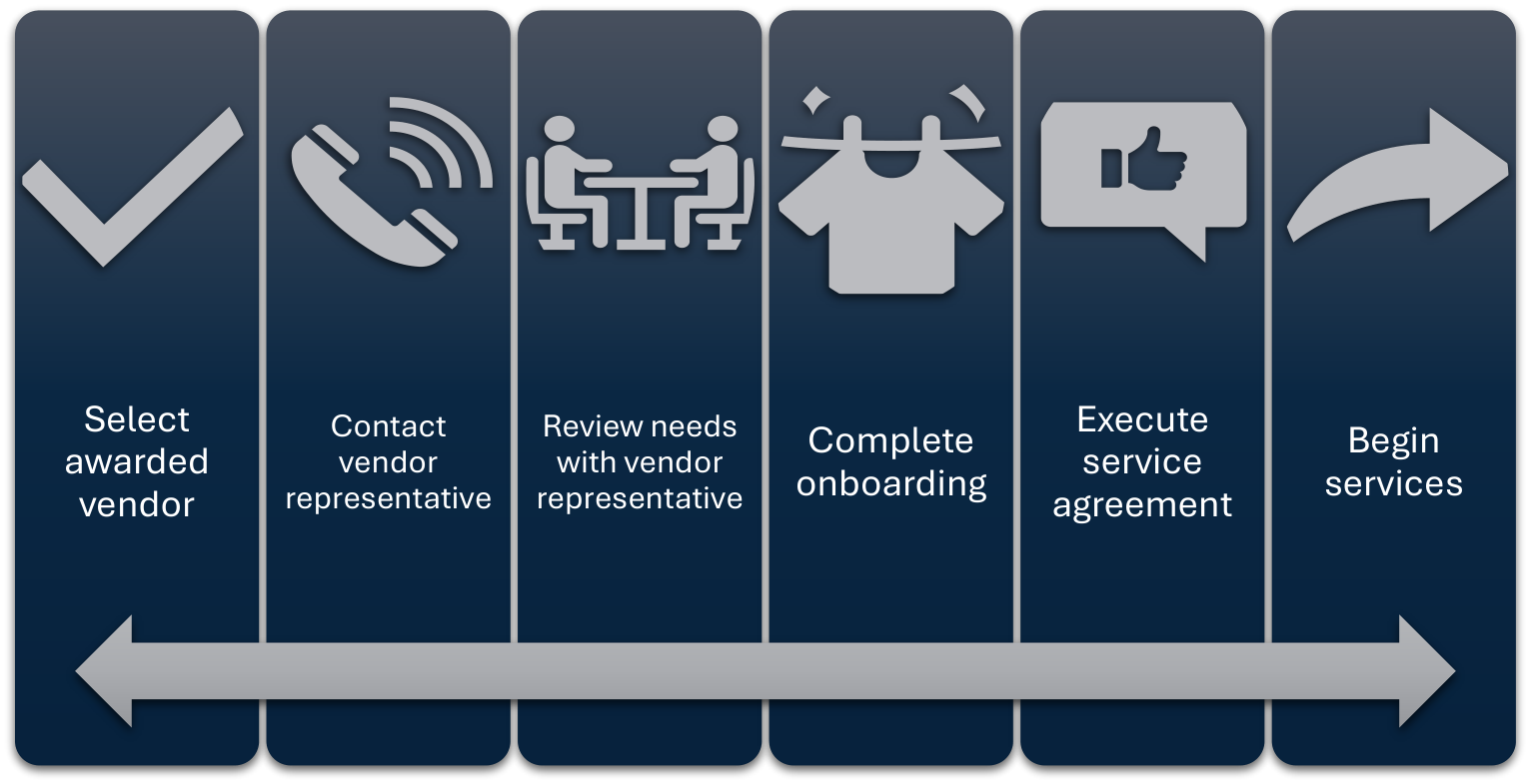
Not sure where to start? The flow chart below provides a simple roadmap for using the STC9110B contract. Follow each step to determine your service requirements, identify the appropriate contract offerings, and complete the actions needed to establish service with a contract vendor. Whether you need uniforms, floor mats, linens, first aid services, or AED leasing, this guide will help you navigate the process efficiently.
5. Understanding the Service Agreement
Why is a Service Agreement Required?
Unlike a traditional purchase of goods, the services available through STC 9110B often involve ongoing delivery, inventory management, recurring service schedules, equipment placement, and site-specific requirements. As a result, each Buying Entity may have different operational needs based on the number of employees served, facility locations, service frequencies, product selections, delivery schedules, and customization requirements.
The Service Agreement establishes these business-specific details between the Buying Entity and the awarded vendor. It serves as the implementation document that outlines how services will be delivered, managed, and supported throughout the duration of the relationship. Buying Entities will work directly with the vendor during onboarding to establish these requirements before services begin.
Relationship Between the Service Agreement and STC 9110B
The Statewide Term Contract establishes the overall contractual framework, including approved vendors, negotiated terms and conditions, authorized services, pricing structure, and performance expectations. The Service Agreement does not replace the Statewide Term Contract.
Instead, the Service Agreement works together with STC 9110B by documenting the Buying Entity's specific operational requirements, including service locations, delivery schedules, inventory needs, customization requests, and other implementation details necessary to provide services.
The Service Agreement must remain consistent with the terms and conditions of STC 9110B. Buying Entities may not negotiate terms that conflict with or supersede the statewide contract without approval through the appropriate contract management process. Buying Entities should consult the State Contract Manager if they have questions regarding contract requirements or proposed agreement language.
What Should Buying Entities Review Before Signing?
Before executing a Service Agreement, Buying Entities should carefully review all proposed service details to ensure they accurately reflect operational needs and expectations.
Recommended Review Checklist
- Service locations are correct.
- Requested services are clearly identified.
- Delivery and service schedules are accurate.
- Employee counts, inventory quantities, and sizing information are correct.
- Product selections and customizations have been confirmed.
- Pricing aligns with the approved STC 9110B pricing schedule.
- Billing procedures and invoicing requirements are understood.
- Points of contact for both the Buying Entity and vendor are identified.
- Service issue reporting and escalation procedures are understood.
- Any Buying Entity-specific operational requirements have been accurately documented.
Important Reminder
Buying Entities should verify pricing against the vendor's approved contract pricing before signing a Service Agreement. Questions regarding pricing, service scope, exclusions, or contract requirements should be addressed before services begin to help ensure a successful implementation and minimize future service issues. Buying Entities are encouraged to contact the vendor representative or the State Contract Manager if clarification is needed.
Quick Tip
Think of STC 9110B as the statewide contract framework and the Service Agreement as the Buying Entity's implementation plan. The statewide contract establishes the rules, while the Service Agreement documents how the services will be delivered for your specific locations and operational needs.
6. Pricing
Contract Pricing
All pricing available under STC 9110B is established through the Statewide Term Contract and the vendor's approved contract pricing list(s). Buying Entities should rely only on the pricing, discounts, fees, and service rates authorized under the contract when evaluating service options and establishing service agreements.
Because services offered under STC 9110B may vary based on locations, service frequencies, inventory levels, product selections, employee counts, and other Buying Entity-specific requirements, the total cost of services will be determined during the onboarding and service agreement development process.
Buying Entity Responsibility
Prior to signing a Service Agreement, Buying Entities should carefully review all proposed pricing and charges to confirm they are consistent with the vendor's approved STC 9110B pricing list(s). Buying Entities should ensure they understand all recurring service charges, rental fees, delivery schedules, inventory quantities, and any other applicable contract-authorized costs.
Questions regarding pricing should be discussed with the vendor before executing a Service Agreement. If an Buying Entity is unable to resolve a pricing concern or has questions regarding contract compliance, they should contact the State Contract Manager for assistance.
Pricing Verification Checklist
Before signing a Service Agreement, Buying Entities should verify:
- Pricing aligns with the approved STC 9110B pricing lists.
- Services included in the agreement are clearly identified.
- Service frequencies and delivery schedules are accurately reflected.
- Inventory quantities and rental counts are correct.
- Any customization or additional services have been reviewed and approved.
- Billing methodology and invoicing expectations are understood.
- Any contract-authorized fees are clearly identified and understood.
Important Reminder
The Service Agreement is the Buying Entity's opportunity to verify that the services, quantities, schedules, and pricing accurately reflect its operational needs. Buying Entities should complete this review before signing the Service Agreement, as the agreement will govern the day-to-day delivery of services after implementation begins.
7. Ordering and Procurement Guidance
This section provides the key procurement information needed to purchase services under the STC9110B contract, including commodity codes, contract identifiers, requisition and purchase order requirements, and other administrative details. Use this information when creating purchasing documents to help ensure transactions are processed accurately and in accordance with contract requirements. These practices can help improve purchasing accuracy, invoice reconciliation, service tracking, reporting consistency, contract management, and audit readiness.
Best Practices
Line-Item Descriptions
When creating requisitions, purchase orders, or other purchasing documents under the STC9110B contract, users should provide clear and detailed line-item descriptions that accurately reflect the services being
purchased. Descriptions should align with vendor quotes, service agreements, and invoices to ensure a consistent record of the transaction.
Detailed line-item descriptions help Buying Entities verify that services billed by the vendor match the services authorized for purchase. They also support service tracking, contract administration, reporting, and audit review by providing a clear understanding of the services performed throughout the contract period. Whenever possible, descriptions should identify the specific service being provided, applicable service frequency, and any other relevant details that distinguish the purchase.
Examples of strong line-item descriptions:
- Monthly Uniform Rental Service for 25 Employees
- Weekly Floor Mat Rental and Exchange Service
- First Aid Cabinet Restocking Service
- AED Leasing and Monitoring Service
- Linen Rental and Laundering Service
Avoid vague descriptions such as:
- Uniform Service
- Facility Services
- Contract Services
- Miscellaneous Charges
By using specific, service-based descriptions, Buying Entities can improve purchasing accuracy, simplify invoice reconciliation, and support consistent contract reporting.
Separate Service Categories
If multiple service types are being purchased, consider listing each service category as a separate line item rather than combining them into a single entry. This approach improves visibility into expenditures and makes it easier to track utilization of different contract services.
Include Service Frequency When Appropriate
For recurring services, identify the service frequency (weekly, bi-weekly, monthly, etc.) within the purchasing record whenever practical. Documenting service frequency helps establish clear expectations and facilitates invoice review.
eProcurement Guidance
Requisition and Purchase Order Setup
When creating a requisition or purchase order, always select STC 9110B from the available STC drop-down list. Do not type the contract number manually. Using the system-selected contract value ensures accurate reporting, consistent contract utilization data, and proper tracking of purchases made under this State Term Contract.
Recommended Commodity Codes by Service
When creating a requisition or purchase order under the STC9110B contract, users should select the commodity code that most accurately reflects the service being procured. Using the recommended
commodity codes helps maintain consistent procurement data, supports contract management and reporting efforts, and ensures purchases are properly categorized within the procurement system.
Uniform Rental
- 911115 Laundering Services (91111501 - Uniform Rental)
- 911018 Clothing Rental
Facility Services (Floor mat, floor mop, linen, wiper, towel services plus restroom supplies services, hand hygiene services, and cleaning solution dispensing services)
- 761116 Building Component Cleaning Services
- 761115 General Building and Office Cleaning and Maintenance Services
Safety Training Services
- 861017 Nonscientific Vocational Training Services (86101709 Safety Training Services)
First Aid and Safety Supply Services
- 931418 Employment (93141808 Occupational Health or Safety Services)
AED Leasing
- 851615 Medical or Surgical Equipment Repair (85161505 Medical or Surgical Equipment or Implant Rental and Shipping Fee)
8. Vendor Performance Expectations
The success of STC 9110B depends not only on competitive pricing, but also on the vendor's ability to consistently deliver high-quality services that meet the operational needs of participating entities. Vendors are expected to provide reliable, responsive, and professional service throughout the life of the Service Agreement while complying with all applicable contract requirements, pricing provisions, and performance standards. Buying Entities should actively monitor service quality and communicate concerns as they arise to help ensure services remain aligned with contract expectations and business needs. The performance expectations listed below represent key areas Buying Entities should evaluate when assessing vendor performance under STC 9110B.
Vendors are expected to provide:
- Accurate deliveries
- Timely service
- Responsive customer support
- Contract-compliant pricing
- Accurate and transparent invoicing
- Consistent service quality
- Professional and courteous service personnel
- Timely resolution of service issues and complaints
- Proactive communication regarding service disruptions or delays
- Proper maintenance and replacement of rented products
- Compliance with Service Agreement requirements
YOUR Feedback Matters
Buying Entities are encouraged to document recurring service issues and communicate concerns to the vendor as soon as they arise. If issues remain unresolved, Buying Entities should escalate the matter to the State Contract Manager for assistance.
9. Problem Resolution
While STC 9110B is designed to provide reliable and consistent service, Buying Entities may occasionally encounter issues related to service delivery, invoicing, product quality, inventory management, scheduling, or other operational matters. Promptly identifying and addressing these issues helps ensure contract performance remains aligned with Buying Entity expectations and service requirements.
Buying Entities are encouraged to work directly with the vendor to resolve concerns whenever possible. Most service issues can be addressed through routine communication with the vendor's route representative, account manager, or customer service team. Maintaining clear documentation of the issue, including dates, affected locations, photographs (when applicable), invoices, and previous communications, can help expedite resolution.
If a concern cannot be resolved directly with the vendor or becomes a recurring issue, Buying Entities should escalate the matter through the appropriate vendor management channels. The State Contract Manager is available to assist with unresolved issues, recurring performance concerns, pricing discrepancies, or questions regarding contract compliance.
Common Issues
Buying Entities may experience issues such as:
- Missing or incomplete deliveries
- Incorrect products, sizes, or quantities
- Damaged or defective items
- Missed service visits
- Inventory shortages
- Billing discrepancies
- Pricing concerns
- Delayed response to service requests
- Service quality concerns
- Safety or compliance concerns
Recommended Escalation Process
Step 1: Contact the vendor's route representative, service technician, or customer service team.
Step 2: If the issue remains unresolved, escalate to the vendor's account manager or regional representative.
Step 3: Document the issue, including the nature of the concern, dates of occurrence, actions taken, and communications with the vendor.
Step 4: If resolution is not achieved within a reasonable timeframe, contact the State Contract Manager and provide supporting documentation.
Buying Entity Best Practices
To help facilitate timely issue resolution, Buying Entities should:
- Report issues as soon as they are identified.
- Maintain copies of invoices, service records, and correspondence.
- Verify deliveries and services upon receipt.
- Monitor recurring issues and trends.
- Communicate service expectations clearly during onboarding and throughout the contract term.
- Escalate unresolved issues before they become long-term performance concerns.
Important
Buying Entities should not sign amended service agreements, accept pricing changes, or agree to contract modifications that conflict with STC 9110B without consulting the State Contract Manager. Any concerns regarding contract compliance should be escalated promptly for review.
10. Buying Entity Protections and Contract Safeguards
The STC9110B contract includes several provisions designed to protect Buying Entities and participating entities while ensuring consistent service delivery. Understanding these provisions can help Buying Entities effectively manage vendor relationships, address service concerns, and take full advantage of the benefits available under the contract.
The following highlights key contract terms and protections available to contract users. Buying Entities should always refer to the contract documentation for complete requirements and conditions.
No Minimum Usage Requirements
Buying Entities may utilize services as needed without committing to a minimum purchase volume beyond any requirements established in their individual service agreements.
Termination Provisions
Buying Entities should familiarize themselves with any applicable cancellation, termination, or notice requirements associated with service agreements established under the contract. Understanding these provisions can help Buying Entities manage changes in service needs and vendor relationships.
Remember: The contract is more than a purchasing vehicle. It also establishes expectations for vendor performance, pricing, service delivery, and issue resolution. Buying Entities are encouraged to familiarize themselves with these provisions to maximize the value and protections available through STC9110B.